

Custom Plano Convex Lenses (PCX) for Precision Optical Systems
Precision Focusing & Collimation | BK7 & Fused Silica | Custom OEM Optics
- Precision Focusing & Collimation: Featuring one flat surface and one convex surface, plano-convex (PCX) lenses provide a positive focal length for focusing collimated beams or collimating light from a point source. They are widely used in laser systems, optical instruments, and precision imaging applications.
- Reduced Spherical Aberration: When used to focus a collimated beam, plano-convex lenses typically perform best with the convex surface facing the incoming beam. This orientation helps minimize spherical aberration and improve focusing performance in laser and precision optical systems.
- High Surface Accuracy: Precision-polished plano-convex lenses with surface irregularity specifications of < λ/4 PV available for standard applications. Tighter surface figure tolerances can be provided upon request, helping support consistent optical performance in laser, imaging, and machine vision systems.
- OEM & Industrial Supply: Custom plano convex lenses are available in BK7, UV fused silica, and other optical materials, with tailored diameters, focal lengths, surface specifications, and AR coatings. We support OEM manufacturing based on customer drawings and application requirements.
Technical Specifications
| Technical Parameter | Specification |
|---|---|
| Substrate | Optical Glass (H-K9L / N-BK7), UV Fused Silica, ZnSe (IR Applications) |
| Dimensions (Diameter) | Ø2–100 mm (Typical Range); Custom Diameters Available upon Request |
| Dimensional Tolerance | ±0.1 mm (Standard) / ±0.03 mm (High Precision, Subject to Design Review) |
| Focal Length Tolerance | ±2% (Standard) / ±1% (High Precision, Available upon Request) |
| Surface Quality | 40-20 Scratch-Dig (Standard), tighter specifications available on request |
| Surface Irregularity | ≤ λ/4 PV @ 632.8 nm (Over Clear Aperture) |
| Centration | < 3 arcmin (Standard); Tighter Tolerances Available upon Request |
| Coating Options | Uncoated / Custom AR Coatings (e.g., 350–1100 nm, 1050–1700 nm); Other Wavelengths Available upon Request |
Product Overview
The Core Building Block of Optical Systems
Plano-convex (PCX) lenses are widely used for beam focusing, collimation, and light collection in precision optical systems. Custom plano convex lenses can be manufactured in optical glass, UV fused silica, or infrared materials such as ZnSe to suit different operating wavelengths. Typical applications include LED illumination, machine vision, laser beam delivery, and industrial optical instruments.
High Optical Throughput
Plano-convex lenses can be supplied with wavelength-specific anti-reflection coatings to reduce surface reflection losses and improve optical transmission. Depending on the application, substrates include H-K9L or N-BK7 for visible and near-infrared optics, UV fused silica for ultraviolet applications, and ZnSe for infrared systems. Custom BBAR and narrowband V-coatings are available to meet specific wavelength and performance requirements.
Reliable, Ready-to-Integrate Optics
Clarvis Industrial provides custom plano convex lenses manufactured according to OEM drawings and application requirements. Available options include custom focal lengths, diameters, optical substrates, surface tolerances, protective chamfers, and AR coatings. We support prototype development, small-batch production, and repeat orders for integration into laser systems, imaging equipment, and industrial optical assemblies.
Application & Engineering Integration
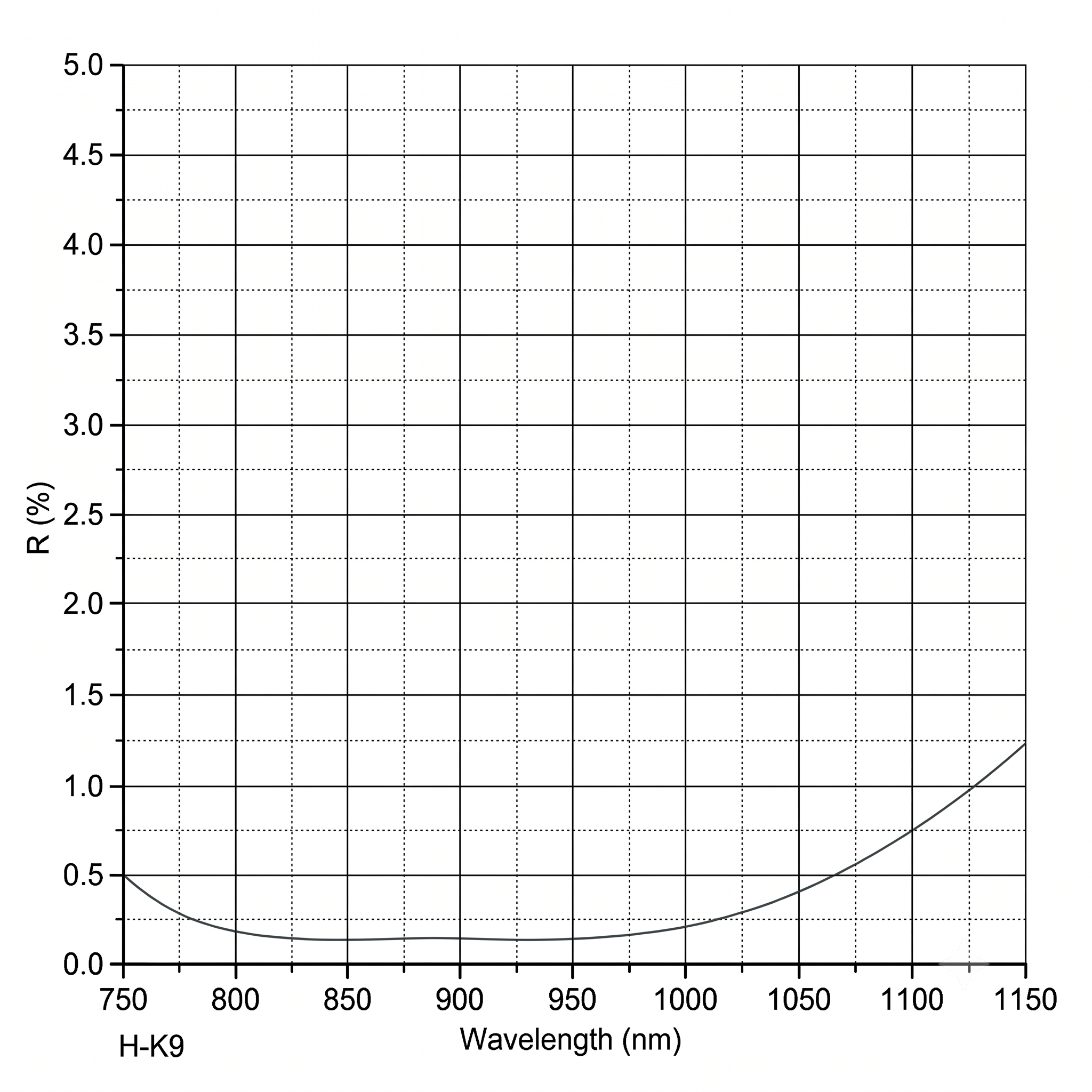
Figure 1: NIR BBAR Coating Reflectance (Plano-Convex Lens)
The measured NIR BBAR coating reflectance remains below 0.5% within the specified 760–1050 nm wavelength range for the tested H-K9 substrate. This result demonstrates effective reflection reduction and supports efficient optical transmission in near-infrared laser and optical sensor applications.
Metrology Analysis & Application Fit
- Target Wavelength: Plano-convex lenses are available for UV, visible, near-infrared, and infrared applications, depending on the substrate and optical coating. Common materials include UV fused silica for UV applications, H-K9L or N-BK7 for visible and NIR systems, and ZnSe for infrared wavelengths such as 10.6 µm.
- Critical Orientation: To minimize spherical aberration, the convex surface of a plano-convex lens should generally face the longer conjugate distance. When focusing a collimated beam, the convex side faces the incoming light. When collimating light from a point source, the flat side faces the source. Actual orientation may depend on the optical system design.
- Primary Applications:
- Laser beam focusing and collimation in industrial optical systems.
• LED illumination and machine vision lighting systems.
• Light collection and beam delivery in optical sensors and detectors.
• Precision imaging, optical instrumentation, and laboratory systems.
Custom Optomechanical Solutions
Clarvis Industrial supports custom plano convex lenses with non-standard focal lengths, precision dimensions, and application-specific optical specifications. Edge-blackening options are available to help reduce stray light in sensitive imaging and sensor systems. Our technical team can review your CAD drawings and assist with material selection, coating requirements, and optical-mechanical integration.