
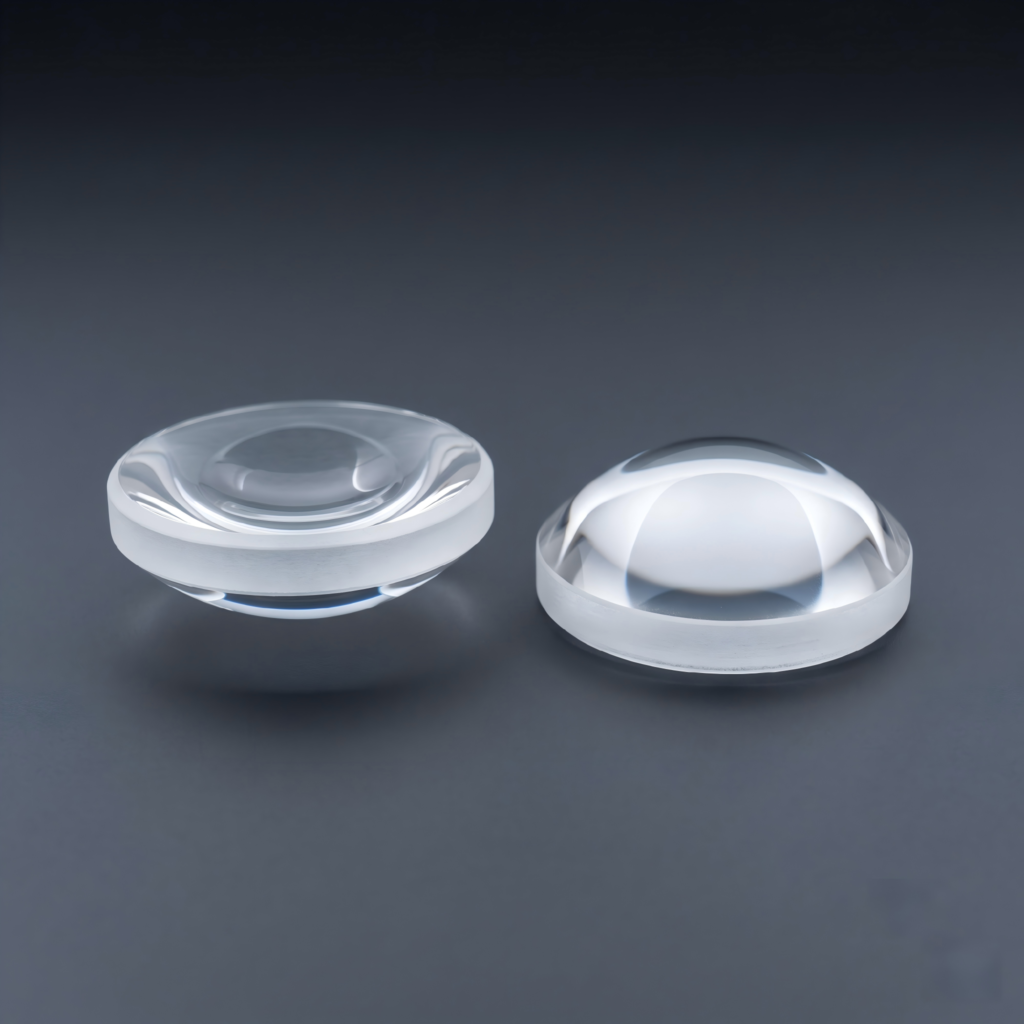
Precision Aspheric Lenses for Aberration-Free Imaging
Spherical Aberration Elimination | Compact Optical Design | OEM Custom Integration
- Aberration Control: Designed with a non-spherical surface profile to help reduce spherical aberration and optical distortion, supporting tighter focusing and improved imaging performance.
- Compact Optical Design: A single aspheric lens can sometimes replace more complex multi-element assemblies, helping reduce system size, weight, and assembly complexity while maintaining efficient light transmission.
- Machine Vision & Laser Applications: Well suited for high-NA systems, laser diode collimation, and wide-angle imaging where compact design and reduced aberration are important.
- OEM & Industrial Supply: Aspheric lenses are available with custom focal lengths, diameters, substrate options, surface specifications, and AR coatings for laser, imaging, machine vision, and compact optical systems.
Technical Specifications
| Technical Parameter | Specification |
|---|---|
| Substrate | Premium Optical Glass (e.g., D-ZK3, N-BK7), UV Fused Silica |
| Manufacturing Process | CNC Precision Polishing / Precision Glass Molding (PGM) |
| Dimensions (Diameter) | Custom (Typical range: 2mm to 100mm) |
| Dimensional Tolerance | ±0.03mm (Precision) |
| Surface Quality | 40-20 Scratch-Dig (Standard), tighter specifications available on request |
| Surface Irregularity | < 0.5μm (Standard) to < 0.1μm (Precision CNC) |
| Clear Aperture | > 90% of central dimension |
| Coating Options | Uncoated, or Custom BBAR / V-Coat (UV, VIS, NIR) |
Product Overview
Redefining Optical Limits
Traditional spherical lenses naturally suffer from spherical aberration, where light rays passing through the edge of the lens focus at a slightly different point than rays passing through the center. Aspheric lenses correct this physical limitation by continuously altering the radius of curvature from the center to the edge. This helps reduce spherical aberration and supports tighter focusing for precision alignment, imaging, and dimensional measurement applications.
High Optical Throughput
Fewer lenses in an optical path mean fewer surface reflections and lower absorption losses. By streamlining your optical train with aspheres, combined with our custom Broadband Anti-Reflective (BBAR) dielectric coatings, your system can achieve high optical throughput across the designed wavelength range. This is critical for capturing high-speed data with CMOS sensors or maximizing power delivery in laser targeting applications.
Reliable, Ready-to-Integrate Optics
Navigating global supply chains requires absolute predictability. We deliver globally compliant, tightly toleranced aspheric components directly to your factory floor or third-party integrators. With controlled centering, edge finishing, and dimensional tolerances, our lenses are designed to support reliable integration with laser barrels, imaging modules, and machine vision housings.
Application & Engineering Integration
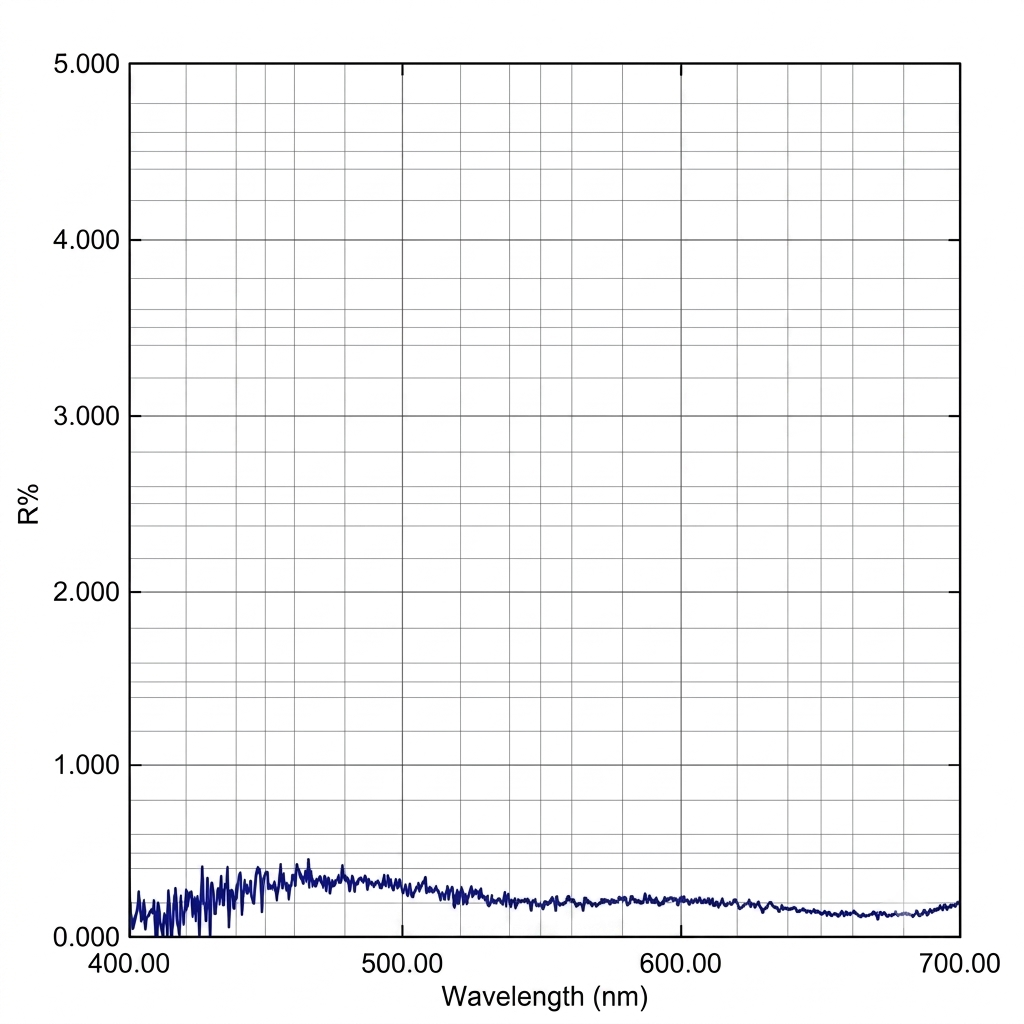
Figure 1: Aspheric Lens Reflectance (BBAR Coated)
The measured reflectance remains below 0.5% across much of the visible range (400–700 nm), indicating effective broadband anti-reflection performance and helping reduce ghost reflections in high-NA imaging systems.
Metrology Analysis & Application Fit
- Target Wavelength: Broad compatibility from Deep-UV to Near-IR, depending strictly on the chosen substrate and coating formulation.
- Design Flexibility: Available in plano-convex, double-convex, or meniscus aspheric profiles to match the conjugate requirements of your optical design.
Primary Applications:
• Laser diode collimation and fiber coupling
• High-NA machine vision and barcode scanning lenses
• Biomedical imaging devices and endoscopes
• LiDAR and advanced optical sensors
Custom Optomechanical Solutions
Manufacturing and measuring aspheric surfaces requires precision CNC grinding, MRF polishing, and advanced profilometry. Our engineering team is equipped to review your complex Zemax design files, advise on manufacturability, and provide a comprehensive, scaleable production solution tailored precisely to your instrument housings.